

Surfexplore
John Seaton Callahan: The Art of Finding What Others Haven’t
More than 35 years of surf exploration. The discovery of Cloud 9. Expeditions to some of the world's least-travelled coastlines. Photographer, explorer and author John Seaton Callahan reflects on the pursuit of undiscovered waves, the consequences of bringing them to the world's attention, and why genuine exploration still matters.
More than 35 years of surf exploration. The discovery of Cloud 9. Expeditions to some of the world’s least-travelled coastlines. Photographer, explorer and author John Seaton Callahan reflects on the pursuit of undiscovered waves, the consequences of bringing them to the world’s attention, and why genuine exploration still matters.
Before Google Earth, satellite forecasting and social media made much of the world’s coastline accessible from a phone, finding an unknown wave required something else entirely.
Nautical charts. Local knowledge. Months of research. A willingness to travel somewhere without knowing whether the journey would produce anything worthwhile.
Few people understand that world better than John Seaton Callahan.
A photographer and founder of the surfEXPLORE Group, Callahan has spent more than three decades travelling to remote coastlines, documenting waves and the communities surrounding them. In 1992, he led an expedition to Siargao in the Philippines, where he named the wave now known around the world as Cloud 9.
His book, surfEXPLORE: Discovering New Surfing Locations Worldwide, documents 28 destinations and the extraordinary experiences behind them.
We spoke to John about the instinct to explore, the changing nature of surf travel, the responsibilities that come with discovery, and the places that remain beyond the familiar map.
You’ve spent more than 35 years travelling in search of waves. Where did that instinct to explore come from?
I think it is related to moving to Hawaii at a young age, in 1969.
Living in Hawaii, one is aware that the Hawaiian Islands are some of the world’s most remote islands, five and a half hours by plane from Honolulu to Los Angeles and eight hours to Tokyo.
For many Hawaii people, getting out of Hawaii is the goal, not staying there!
Mainland transplants have exactly the opposite perspective. They want to get to Hawaii and live there, but if you are actually from Hawaii, it’s different.
For many Hawaii people, the goal is to escape the isolation, overcrowding and ignorance of a group of tiny islands in the vast, empty expanse of the North Pacific Ocean and go somewhere else.
Before satellite imagery, surf forecasting and smartphones, what did finding an unknown wave actually involve?
Finding new surfing locations in the pre-internet era was a different game entirely.
The main sources of viable, relevant information were nautical charts, published by the British Admiralty or the US Defense Mapping Agency.
For remote places like Indonesia, the Philippines and the Andaman and Nicobar Islands of India, a nautical chart was by far the most important source of information.
Nautical charts were the only source that had any information on offshore bathymetry, which is critical to finding surfable waves in remote areas.
Most of this information had likely been compiled by bored Royal Navy or US Navy sailors using a hemp rope with a lead weight on the end, knotted in fathoms and dropped over the side of a boat, over and over again, sometimes more than a century ago.
These sailors would have had no idea their depth information would eventually be used to find new surfing locations in remote areas of the world!
You led the 1992 expedition to Siargao and named Cloud 9. Take us back to the first time you saw that wave.
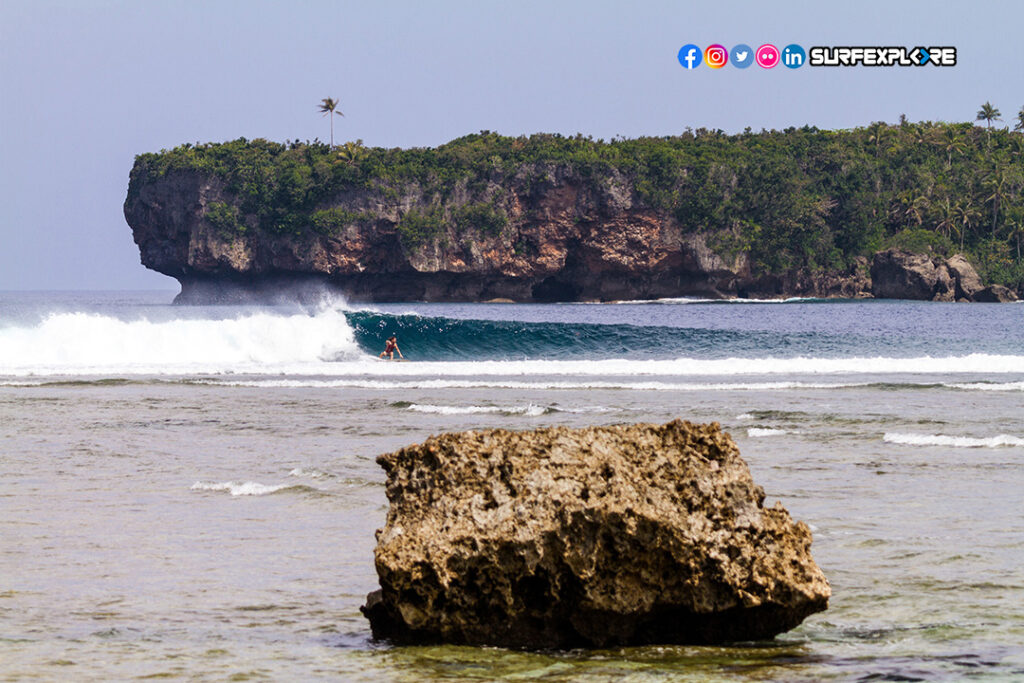
Our first trip to Siargao Island in 1992 and the first time we took the boat to the wave I named Cloud 9 were quite memorable.
We got a cottage on the beach at the only commercial accommodation in the area and met two Australian surfers, Kevin Davidson and Dave Motbey, who had arrived the day before.
They invited us to share a boat with them. We got up at sunrise, had some instant coffee and toast for breakfast, then motored out to the reef, trading six-foot offshore lefthanders until we were too tired and hungry to surf.
We surfed and photographed this lefthander for the next few days, until Evan came back to the boat and declared, “We should pull the anchor and look around for a right. We are getting bored going left.”
I had several days of images from the left in the can, so I agreed.
We discussed a plan with Jo-el, the boatman. He checked the plastic jug of gasoline next to the motor and nodded. We had enough fuel for some reconnaissance.
We pulled the anchor and fired up the ear-shattering unmuffled banca motor and were off into the unknown.
After a while, we saw spray coming off what looked like a clean peak with a channel next to the right.
Trying to evaluate waves from the back is nearly impossible, so we nominated Taylor to paddle over and check it out.
Taylor threw his board in the water and jumped in. We gathered under the shade cover and waited as he paddled towards the peak.
He put his head down and paddled hard.
Evan said, “Here he goes.”
We were all watching as Taylor caught a wave and disappeared. As the wave began to break, we could see his track from behind the wave as he moved towards the channel, very fast.
Suddenly he appeared on the shoulder, gliding on flat water and looking back at the boat with his arms over his head and shouting, “Aaaawwooooooooooo!”
There was a mad scramble for wax, leg ropes and sun-blocking rash shirts as everyone tried to jump in at once.
The boat was rocking and Jo-el looked surprised and asked me, “What’s going on?”
I said, “Can you keep the boat here for a while? We are going surfing.”
I later named the wave Cloud 9 after the local no-melt chocolate bars, as walking into General Luna town after lunch for a Cloud 9 bar and a warm Coke was one of the highlights of our day.
Could you have imagined what Siargao and Cloud 9 would eventually become?
In no way did Siargao present itself as a candidate for international tourism development.
In 1992, it was a very obscure island with almost no visitors and no tourism development at all.
There was no airport, it was hard to get to by boat, and there was only one place for visitors to stay in the General Luna area.
General Luna did have a very progressive mayor, the late Mr Jaime Roussillon. A few years later, the provincial government began its annual sponsorship of the Siargao Cup event.
The momentum grew into a visitor industry that hosted 500,000 visitors to Siargao in 2025.
That level of progress and prosperity would have been considered a wild fantasy in 1992.
There is a contradiction at the heart of surf exploration. Discovering and documenting a place can ultimately contribute to changing it. How do you think about that responsibility?
The positive changes that can result from international exposure are one of the main themes of my book.
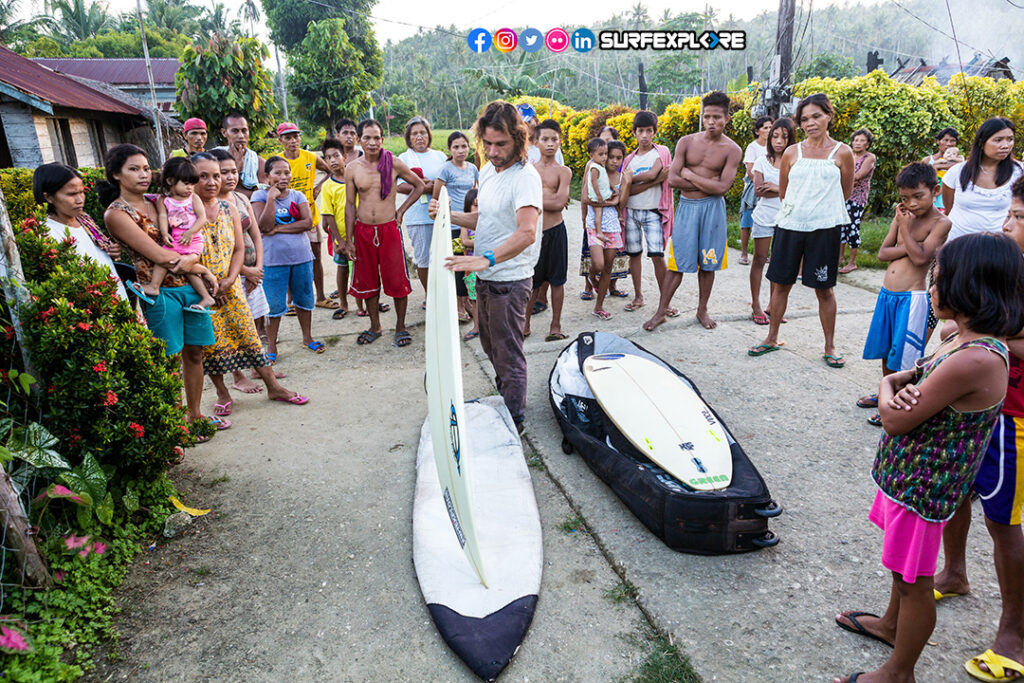
In direct contradiction with what most surfers think, many local people living in these places actively ask us to invite our friends to come and surf in their area.
They see very few visitors and receive close to no government assistance.
Two or three hundred surfers a year, paying for accommodation, food and beverages, can make a big difference to a remote village.
Take Sorake Village at Lagundri Bay on Nias Island in Indonesia.
Before surfers arrived in the early 1970s, locals fished and farmed, and many people left to find paying jobs elsewhere.
After surfers began visiting Lagundri Bay, accommodation was built and visitor numbers grew.
Today, Sorake is, in my view, the wealthiest village in south Nias by a long way, thanks to the development brought by the wave in its backyard.
General Luna on Siargao Island followed a similar path.
When we first visited in 1992, there were no surf shops, cafés or tourism businesses. Today, the visitor industry provides thousands of paying jobs.
The transformation has been extraordinary.
Some surfers argue that certain waves should remain secret. You clearly disagree.
I have never been the type to return to the same location season after season and complain about how everything has changed.
Change is normal. It is stasis that is bad.
For people who cherish the idea of secret spots, places they can discover, never tell anyone about and return to year after year, I think there is a selfishness to that attitude.
Secret spots deny local people the opportunity to make a living from visitors by utilising a natural resource, in this case high-quality surfing waves.
If I wanted to be one of these people, I could be. Trust me, I have plenty of secret spots myself.
But thirty years of worldwide travel have shown me this attitude is selfish and completely wrong.
Take the Rip Curl video Ain’t No Wave Pool, featuring Mick Fanning riding a phenomenal tropical wave referred to as The Snake.
The location was deliberately kept secret.
From my perspective, this was a missed opportunity for the local community and tourism businesses.
Why the secrecy? Why pretend a location is in the middle of nowhere when it is actually a holiday town with hotels and restaurants?
I don’t get it.
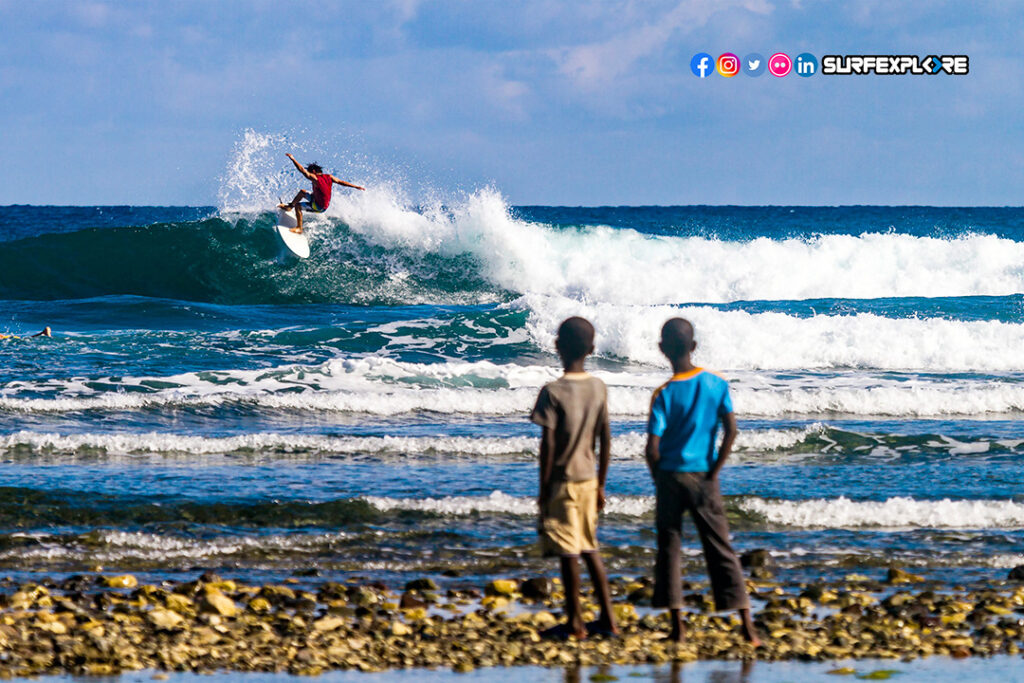
You’ve worked in more than 60 countries. What separates genuine exploration from simply travelling somewhere remote with a surfboard?
Good question.
I think what makes the difference between being an explorer and being a tourist is having a plan, and then being able to adjust or, if necessary, abandon that plan and come up with another idea.
The goal is to find, surf and document new waves in new places, which is not easy to do.
A tourist goes somewhere and executes a predetermined sequence of events, doing things that literally thousands of people have done before.
I am the first to admit the second option is much easier.
Doing something new is far more difficult and prone to failure.
If you don’t have time, patience or money to waste, go somewhere familiar. It’s hella easier and you may even have a good time.
When you arrive at an unfamiliar coastline, what are you looking for?
Actually, when we arrive at a new location for a surfEXPLORE project, it is already somewhat familiar from extensive research.
Nowhere is exactly like you think it will be, but we already know a lot about our destinations.
We are firm believers in doing as much research as possible before committing time, effort and money to a project.
One of the basic questions is seasonality.
Every surfing location worldwide, famous or obscure, has a season for favourable waves and conditions, and a season for less favourable conditions.
Determining which is which should be your first order of business.
You would be surprised how many people turn up at Pipeline in July looking for giant left barrels, or Jeffrey’s Bay in January looking for the best right-hand point in the world.
You vastly improve your chances by doing the basic research.
Of all your expeditions, which came closest to going completely wrong?
The biggest fuck-up would have to have been on a project in West Java, Indonesia.
I had arranged to stay at the ranger station at Pulau Peuceng and hired an Australian expatriate and his fishing boat operation to take us across the channel to Panaitan Island.
We had paid in advance and were expecting several days of excellent waves at One Palm Point and Apocalypse.
On the first morning, we went straight to One Palm and surfed solid six-to-eight-foot waves for several hours.
Then we noticed an unfamiliar fishing boat coming into the bay, with our charter operator on the front looking agitated.
He pulled up next to us and announced that he had overturned the other boat while fishing in the channel.
All our baggage was on that boat.
We followed him and found it floating upside down, with several fishing boats circling nearby.
We jumped in and began salvaging what we could.
Baggage was soaked, equipment was lost, and the rescue boat became so heavy it threatened to sink as well.
After hours of work, our charter operator announced that our arrangements were cancelled and there would be no refund.
He drove off, leaving us stranded at the ranger station without dry clothes, food or money.
Not a good situation.
Fortunately, we had a capable Bahasa speaker in our group, Eugene Tollemanche.
He explained what had happened to some local fishermen.
They laughed and offered to take us to Panaitan the following morning for a very reasonable price. They even offered to cook lunch on the boat.
The fishermen were as good as their word.
We surfed for the next few days and ended up with a photograph of One Palm Point published on the cover of CARVE magazine in the UK.
Disasters make more interesting reading than perfect trips where everything goes according to plan!
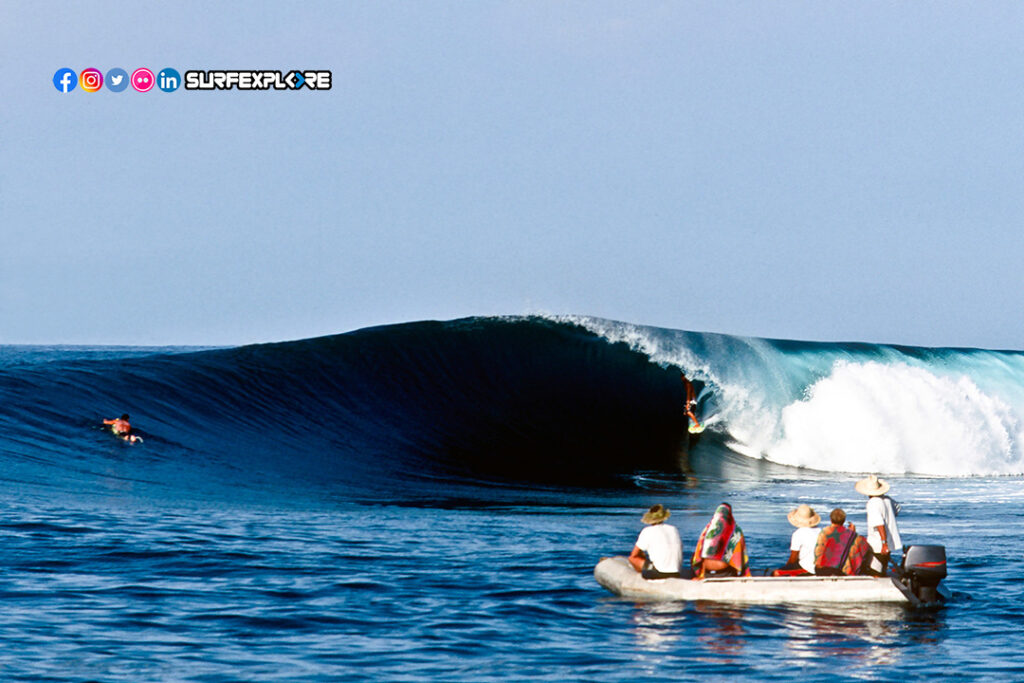
And conversely, was there a moment when everything aligned perfectly?
We had one of those moments in Algeria.
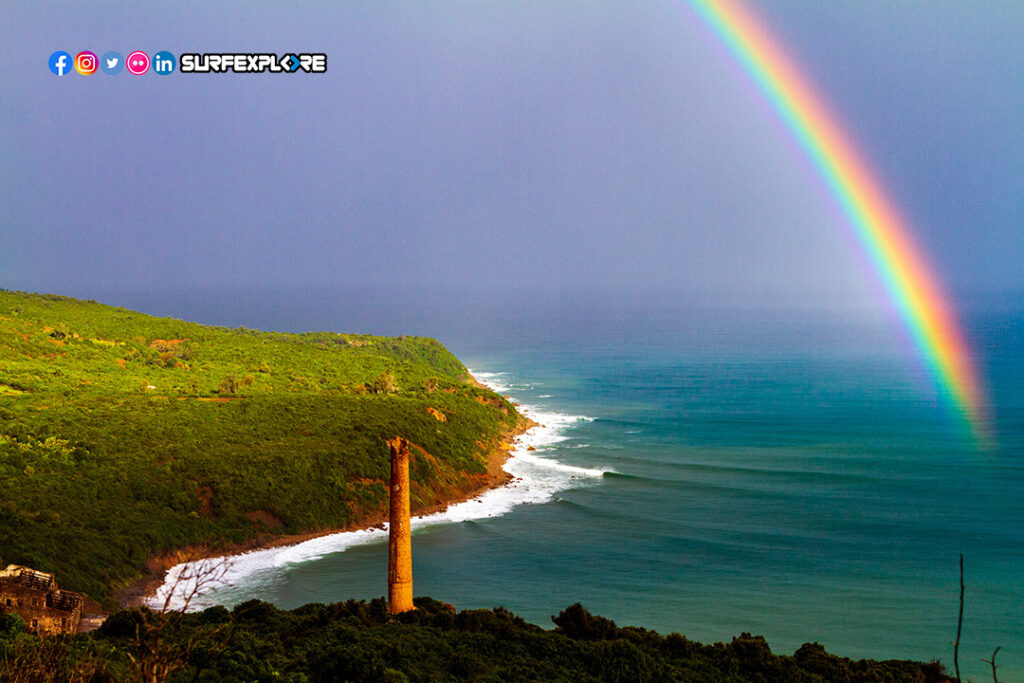
We had spent a week scouting the coastline around Annaba and El Kala when we saw a powerful Mistral storm forming in the Mediterranean.
We made a plan to return to a left point we had identified earlier.
We woke before dawn and drove for an hour through the mountains.
As we descended towards the village, the sun came out.
Then we saw it.
Long lines marching into the point, breaking cleanly through several sections with an offshore wind.
We started shouting and screaming as our driver pulled over.
An offshore rain shower moved in and produced a stunning winter rainbow over the scene.
We unloaded boards, wetsuits and camera gear as quickly as possible.
We surfed overhead waves for several hours.
Many of the locals came out to watch. These were people who spent their lives around the Mediterranean Sea, but they had never seen surfers before.
By the following day, the swell was almost completely gone.
That is what makes the research worthwhile.
You have accumulated an extraordinary photographic archive. What do those images tell you about how places change?
One of the things that really stands out in the older images is how fast things have changed.
Some for the better, but many for the worse.
I recently scanned a binder of Hawaii materials from the 1990s, mostly shot on Kodachrome 64 film.
In my opinion, Hawaii was a much better place thirty years ago.
Fewer people, less expensive, and places like Waikiki still had some of the magical ambience that made Hawaii so alluring.
At the other end of the scale are places like Singapore, which have undergone extraordinary development.
Photography allows you to see those changes in a way that memory alone cannot.
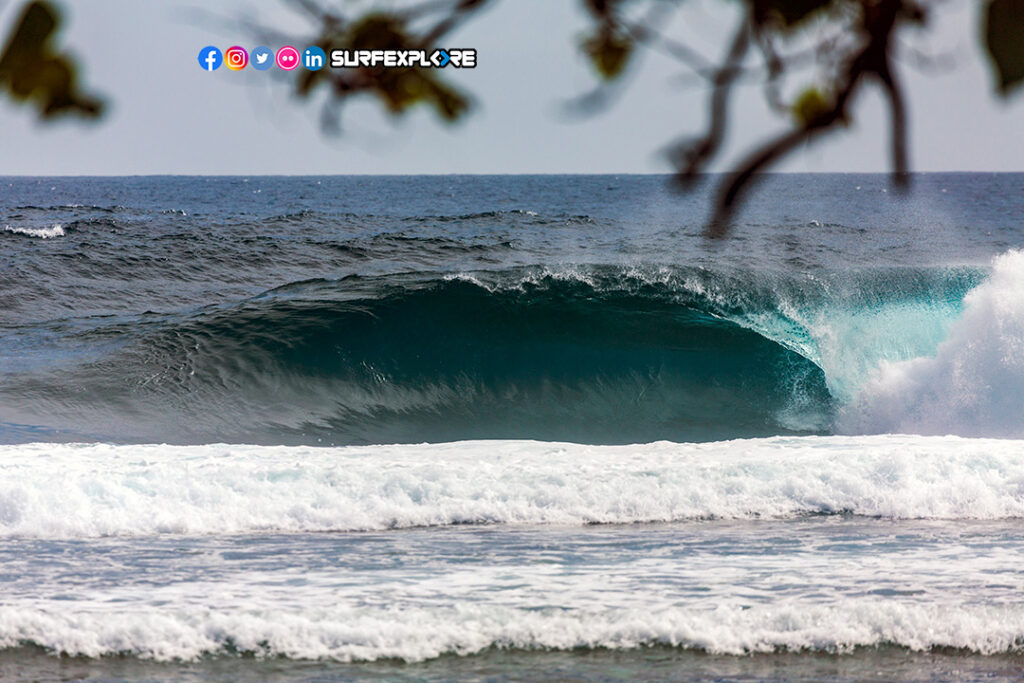
Your book, surfEXPLORE, documents 28 destinations. Why did you decide to bring those experiences together?
The impetus came from a request from Luke Gartside at Wavelength magazine in 2021.
He wanted an article about my most exciting surf discoveries.
While working on the feature, I realised I had a large amount of material, both text and images, that would make a fantastic book.
I had no idea how to find a publisher or pitch a proposal, so I approached it the usual way.
Do the research.
Many people gave me advice, some good and some not so good.
One thing I can tell you is that unless you have a great deal of commitment to publishing a book, you won’t make it to the finish line.
The process for most first-time authors is long and difficult, full of roadblocks and brutal rejections.
If you give up, your book will never be published.
If you do not give up, your book may still never be published, but at least you never stopped trying.
Surf travel has become an industry in its own right. What has it improved, and what has it lost?
Surf travel for most surfers is not an adventure at all, but a holiday with a surfboard.
What has been gained is that all the rough edges have been sanded off popular international surf destinations.
Places like Bali, Weligama, Santa Teresa and Taghazout now accommodate thousands of visiting surfers.
But these destinations concentrate people into limited areas with a fixed number of surf spots.
Last year, I contacted several major surf travel agencies to offer our services in researching and documenting new surfing locations.
The response was a uniform no.
Not one company was interested.
Many told me their customers simply wanted to visit places they had already seen on Instagram and take their own photographs in the same locations.
If that assessment is correct, then surf travel has become just another form of leisure travel, with very little adventure involved.
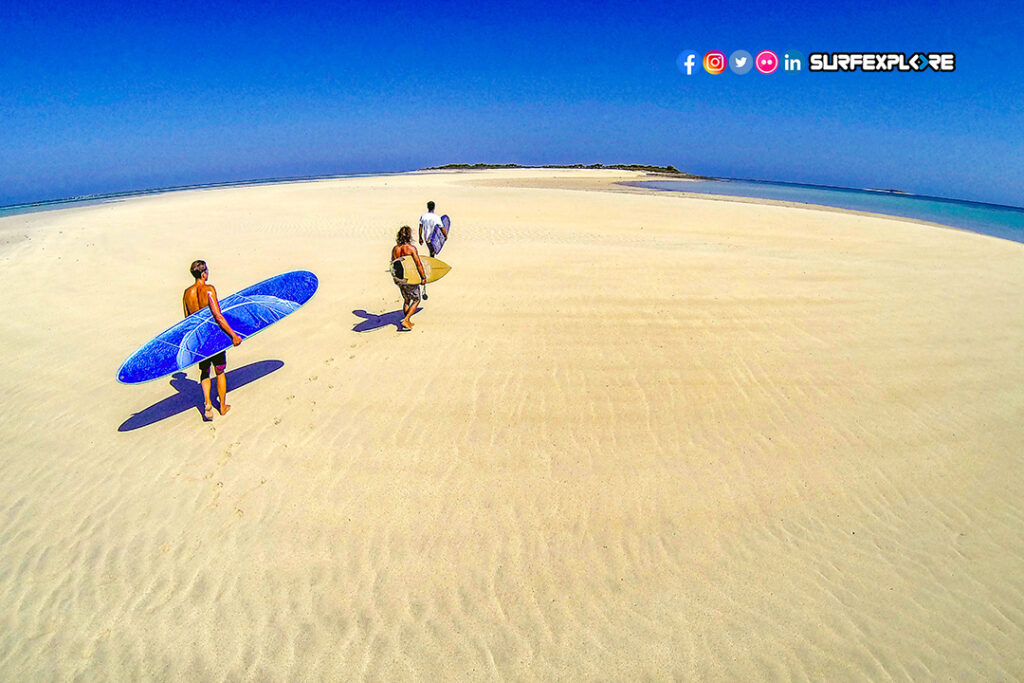
With Google Earth and almost every coastline visible from a phone, do genuinely undiscovered world-class waves still exist?
Absolutely, they do.
We have quite a few potential locations in our surfEXPLORE database awaiting funding.
And it is not only in polar regions.
The Aleutian Islands of Alaska probably have more unsurfed waves than almost anywhere else on Earth.
They are so remote, cold and seldom visited that it would take a lifetime of travel with a steel-hulled expedition yacht and a huge amount of money to investigate even a fraction of the possibilities.
The Nicobar Islands of India are also virtually unsurfed.
The surfEXPLORE Group undertook an expedition there in 1999, and there are certainly opportunities for future exploration, subject to the necessary permissions.
There are also accessible coastlines that receive surprisingly little attention.
The Gulf of Mexico coastline from Veracruz to Matamoros is one example.
People assume there are no waves worth surfing there.
But there are.
Someone simply needs to make the effort to find and document them.
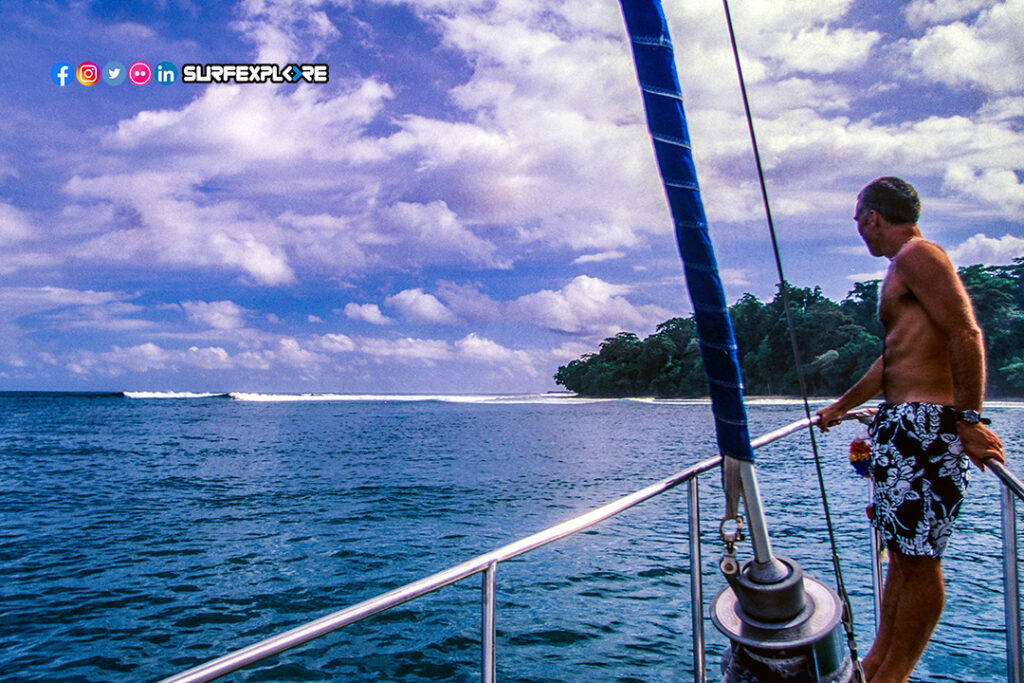
After decades looking for the next place, has your definition of a great surf destination changed? Is the wave still the most important thing?
I think the priority will always be the waves.
There is a greater emphasis these days on food and material comforts in the advertising of surf resorts.
But if the waves are not there, or are so inconsistent that few people think it is worth the time, effort and money to visit, then additions like gourmet cuisine, yoga sessions, hot tubs and plunge pools are pointless.
Those things look great on Instagram.
But without at least one great wave nearby, you’re running a tourist resort, not a surfing resort.
Finally, if a 20-year-old surfer came to you today and said, “I want to spend my life exploring”, what would you tell them?
I would likely say something along the lines of, “I hope you have a trust fund or some other means of income.”
This kind of activity is expensive and in 2026 it is very difficult to find any company in the surfing industry willing to provide funding for exploration and discovery.
There are plenty of locations out there that have never been surfed, but it takes time and money to access them.
The low-hanging fruit was picked long ago.
Take care of the funding first, then the way forward is clear and open to find, surf and document new surfing locations in Africa, Asia, Europe and the Americas.
Let us know what you find.
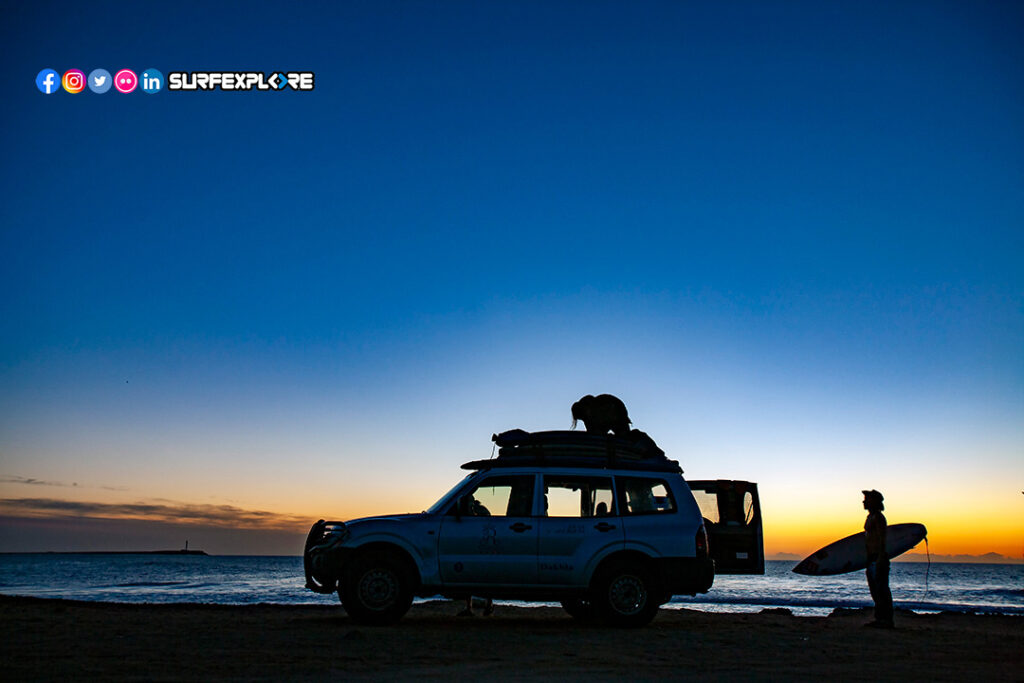
John Seaton Callahan is a surf photographer, explorer and founder of the surfEXPLORE Group. His book, surfEXPLORE: Discovering New Surfing Locations Worldwide, documents decades of expeditions to remote coastlines across the world.
Discover more at surfexplore.info
Interview edited for length and clarity. All photographs © their respective copyright holders. Used with permission.
More from Interviews